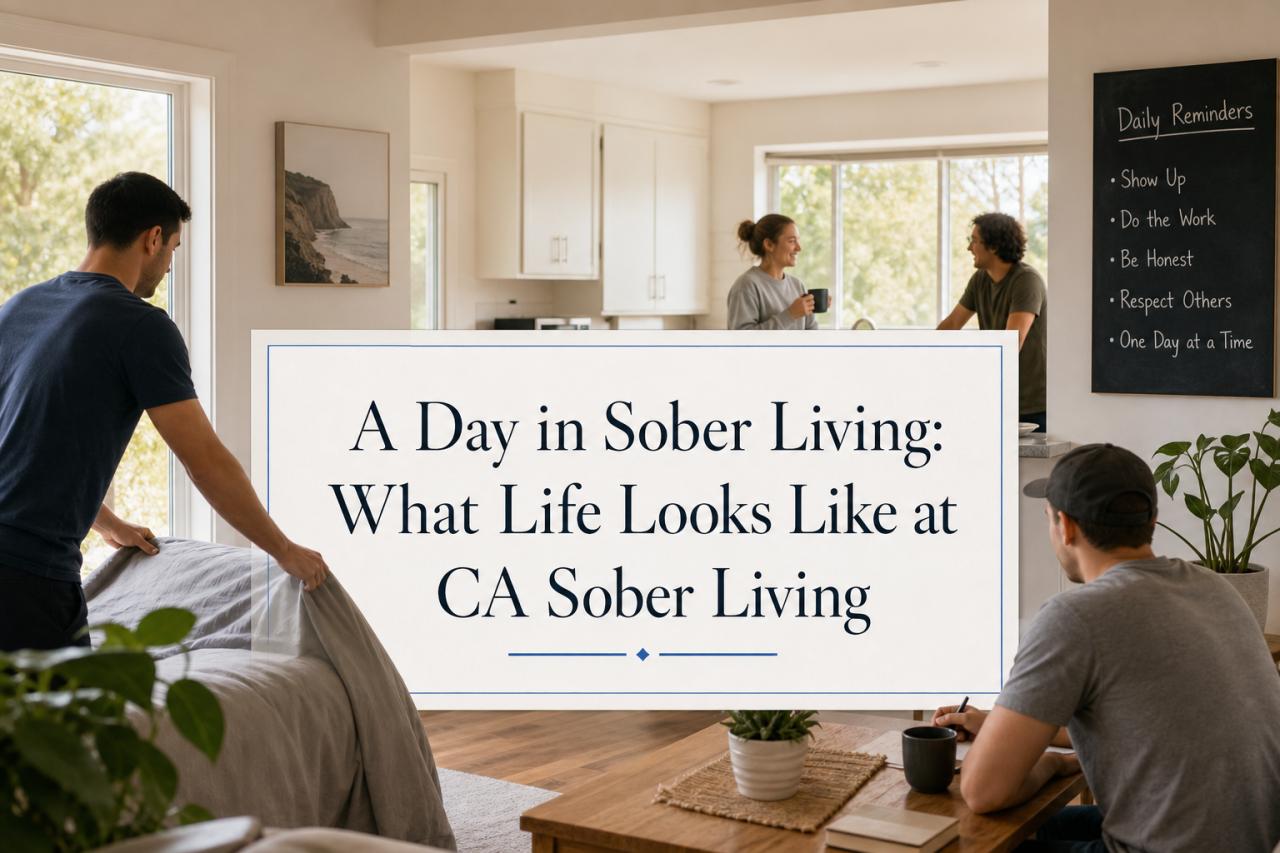
Most family calls to our line start from the same wrong assumption, that a sober home comes with nurses and a treatment plan. California does not license a recovery residence as a treatment facility, because no treatment happens inside one. A recovery residence in Orange County is a shared home where adults who have finished detox or a residential program live together under agreed rules while they rebuild ordinary life. Nobody on site dispenses medication or runs a therapy group. What the house gives you is a substance-free address, housemates who will notice when you slip, and a weekly schedule that leaves less room to drift.
The vocabulary gets loose once families start comparing options, so we keep the roles straight. A hospital stabilizes you, a residential program treats you, and a recovery residence gives you somewhere to practice what treatment taught. Anyone expecting therapy at the kitchen table will be disappointed within a week. Anyone looking for structure, peers who understand the work, and a landlord who will enforce sobriety has found the right category.
We run several recovery residences across Orange County, so what follows comes from inside the houses, including the rules you would sign, what rent covers, and who tends to do well under this model. The most basic question comes first, which is what these homes provide and where their responsibility stops.
What an Orange County Recovery Residence Provides and Where Its Responsibility Ends
Adults in a recovery residence live substance-free under written house rules while they rebuild daily life after treatment, and the home carries no medical responsibility at all. No one there manages withdrawal, prescribes medication, or checks vitals overnight. Clinical work happens elsewhere, usually at an outpatient program, a therapist's office, or a physician's practice, and the residence is where you sleep, eat, and stay sober between those appointments. Families weighing a residence against a detox or a residential center should hold that line clearly in mind.
What the home does provide is structure. Residents agree to expectations that cover curfews, guests, chores, house meetings, and abstinence from alcohol and drugs, and most homes verify that abstinence through testing. Most also expect residents to be working, in school, or attending a recovery program during the day. The reason is practical rather than moral. The first months out of treatment are the stretch when empty afternoons and old routines do the most damage, and a shared home with clear expectations fills that gap in a way a solo apartment cannot.
CA Sober Living operates recovery residences across Orange County, CA, and we describe that scope plainly to every family who calls. We offer housing, accountability, and housemates who are doing the same work. When someone still needs medical detox or a higher level of care, we say so rather than admit them into a house that was never built for it. Federal guidance from SAMHSA describes recovery housing as a support for long-term recovery, and that is the role our homes are designed to play.
The practical question most families ask is who a recovery residence fits. The answer is an adult who has completed detox or a treatment episode, is medically stable, and wants a structured place to live while returning to work and daily responsibilities. If that describes your situation, call (949) 801-5645 and we will talk through whether one of our homes is a realistic next step.
The House Rules You Will Live By, From Curfew to Chores
Every recovery residence we operate in Orange County runs on a written set of house rules covering curfew, drug and alcohol testing, meeting attendance, and shared chores, and you sign those rules before you move in. The purpose is predictability rather than punishment. A house full of people in early recovery only works when everyone can count on the same expectations every single day.
Curfew is usually the first rule new residents ask about. Most homes set an evening return time on weeknights with a later window on weekends, and newer residents often start with a tighter curfew that loosens as they show stability. If you work a night shift or have a standing commitment, you tell the house manager in advance and it gets written down. Coming home late without notice is treated as a real problem rather than a technicality.
Testing is random and frequent. Expect urine screens and breathalyzer checks without warning, including after a weekend away. A positive result does not automatically end your stay in every case, but it does trigger an immediate conversation with the house manager about whether this house remains a fit or whether you need a higher level of care. Telling the manager about a slip before the test almost always goes better than being found out by one.
Meeting attendance is a standing requirement. Many houses ask for a set number of 12-step or alternative recovery meetings each week, verified by a signed attendance card or a check-in with staff. If you are still in outpatient treatment, those sessions may count toward the total, and we settle that with you at intake.
Chores rotate weekly and cover the kitchen, bathrooms, common areas, and trash. Beds get made, dishes do not sit overnight, and house meetings happen on a regular schedule where residents raise problems face to face. None of this is glamorous, and that is the point. A clean home and an on-time arrival are small daily evidence that a life is holding together.
If you want the exact rules for a specific CA Sober Living house before committing, call (949) 801-5645 and we will read them to you.
What a Recovery Residence in Orange County Costs Each Month and What Rent Covers
Rent at a recovery residence in Orange County is a flat monthly fee covering your bed, utilities, house management, and routine drug testing, and the amount depends on the house, the room type, and the neighborhood. We do not publish a single price because no single price would be accurate across our network. A shared room in one of our homes costs less than a private room in another, and coastal locations tend to run higher than inland ones. You get a real number when you call (949) 801-5645 and name the house and room type you are considering.
What that number includes matters more than the number itself. Monthly rent in a recovery residence typically bundles costs a renter would otherwise pay separately, such as electricity, water, internet, and trash service. It also pays for the house manager who enforces curfew and runs testing, along with the supplies those tests require. Compare that against a standard Orange County apartment lease, where you would need first and last month's rent, a security deposit, and separate utility accounts before the keys change hands.
Some costs stay outside rent no matter where you live. Food is usually your own responsibility, though many houses share staples or cook together informally. Transportation, phone bills, personal care items, and any outpatient treatment or therapy you continue after a program are separate expenses. Most residences also ask for a move-in deposit, and some collect the first week or month up front. Ask about refund terms on that deposit before you sign, because policies differ from house to house.
Insurance rarely covers sober living rent. A recovery residence is housing, so it does not bill the way detox or residential treatment does, and that is part of why we are careful to call our homes recovery residences rather than treatment facilities. Families budgeting for the months after treatment should plan for rent as an out-of-pocket housing cost and treat any continuing clinical care as a separate line. When you call, we will walk through what is included at the specific house you are asking about so nothing surprises you at move-in.
How CA Sober Living Runs Its Orange County Houses and Who Fits the Program
CA Sober Living operates more than one recovery residence in Orange County, and every house runs on the same peer-supported, rules-based model. We have no detox beds, no medical staff, and no treatment license, and we tell families that in the first two minutes of a call. What we offer is a sober home with structure, consistent accountability, and housemates who are doing the same work you are.
The structure starts at the front door. Residents agree to house rules in writing before they move in, and those rules cover abstinence, testing, curfews, chores, and participation in house meetings. Testing is consistent for everyone, because a house only feels secure when residents know the rule applies to the longest-tenured housemate as much as to the newest arrival. Residents are also expected to be working, in school, volunteering, or attending outpatient treatment or recovery meetings during the day. A recovery residence works when the day has a shape to it.
House managers stay involved in daily life well beyond collecting rent. They know who is having a hard week, who is picking up extra shifts, and who has skipped meetings for seven days running. That closeness is the main advantage a smaller network of homes holds over a large facility. Problems get noticed early, and the first response is a conversation rather than a consequence.
Our residents are adults who have already completed detox or a treatment program, or who have a stable stretch of sobriety and want a structured place to protect it. You should be medically stable, willing to follow the house agreement, and honest about your history during the intake call. Someone in acute withdrawal, in a psychiatric crisis, or needing daily nursing care needs a higher level of care first, and we will say so directly and point you toward it.
Families are welcome in that intake conversation. Many of our residents' parents or spouses are the ones who first call (949) 801-5645, and we would rather answer hard questions up front than have anyone surprised after move-in. If you want to compare houses, ask about openings, or check whether the timing is right, that call is the fastest route to an answer.
Recovery Residence in Orange County FAQ
Is a recovery residence the same as a treatment center?
No. A recovery residence is housing, and clinical care happens somewhere else. You live in a shared home with other people who are staying sober, follow house rules, and manage your own schedule. There are no doctors on staff, no detox beds, and no therapy groups running in the living room. Clinical work, if you need it, happens with an outside provider while the house gives you a stable, substance-free place to sleep, eat, and rebuild a routine. SAMHSA's guidance on recovery housing describes this same split between housing support and treatment.
How much does a recovery residence in Orange County cost?
Most Orange County recovery residences charge a flat monthly fee that works like rent rather than a medical bill. The number varies by neighborhood, room type, and what the house includes, so we will not quote a single figure here. Because it is housing, health insurance generally does not pay for it the way it may pay for detox or residential treatment. When you call (949) 801-5645, we will tell you the exact monthly cost for the house you are considering, what it covers, and how deposits and move-in timing work.
Do I need to finish treatment before moving in?
A specific completed program is not required, but you do need to be past detox and medically stable. Many residents move in straight from residential treatment or while attending outpatient or intensive outpatient care nearby. Some arrive with months of sobriety already and simply need a structured home away from a living situation that put them at risk. What matters is that you are not in active withdrawal and that you are willing to live by the house agreement.
What happens if someone returns to use in the house?
A return to use triggers the house policy every resident agreed to at move-in, and that policy protects the people who are still sober. Depending on the house and the situation, that may mean immediate removal, a referral back to a higher level of care, or a documented plan to return after a period of stability. We explain this before you move in so nobody is surprised. A drug-free home only stays that way when the response to use is the same for everyone.
How long do people usually stay?
Most residents stay several months, and longer stays are common for people who want to lock in employment, a housing plan, and a support network before living on their own. There is no fixed graduation date. You leave when you have built enough stability that the structure is no longer doing work for you, and that timeline looks different for someone six weeks out of treatment than for someone with a year of sobriety.
Can my family visit or check on me?
Visiting rules vary by house, and most residences set specific hours and require visitors to be sober on the property. Family members are welcome to call our admissions line with questions about the house, the rules, and how to stay involved without undermining a resident's independence. We will explain what we can share about a resident's progress and what stays private.
Ask About Openings in Orange County
Call (949) 801-5645 or Contact Us to talk through availability, monthly cost, and whether a recovery residence in Orange County is the right next step for you or someone in your family.