Guides
September 30, 202611 min read
Are Sober Living Homes Licensed in California? A Plain Answer
California licenses treatment facilities, not sober living homes.
CSL
CA Sober LivingIs sober living right after rehab the right move for your family member? What an Orange County recovery residence is, typical house rules, how rent works, and how to decide.
CA Sober Living
Editorial Team

Is sober living right after rehab the right move for your family member? What an Orange County recovery residence is, typical house rules, how rent works, and how to decide.
The day your loved one leaves a treatment program is often the first day in weeks that nobody is checking on them, and that gap is where most families start asking whether the discharge plan is enough. If you're weighing is sober living right after rehab, start with what a recovery residence actually does. It gives your family member structured housing with written rules, peer accountability, and housemates who have all agreed to stay sober. The real question is whether your loved one needs that structure during the months when old routines and old contacts are easiest to drift back toward.
We operate recovery residences across Orange County, and the families who call us at (949) 801-5645 usually understand what rehab was. What they can't picture is the next step, what it costs, and how strict the house will actually be. This guide answers those questions plainly, including what a recovery residence is and isn't, the signs that structured housing fits your situation, the rules you should expect to see in writing, and how Orange County families typically pay for it.
You should be cautious of any operator who quotes success rates without showing you the data behind them, and we will not quote you any. What we can give you is a straight account of how this type of housing works, so you can decide with your loved one and their treatment team whether it belongs in the plan. That starts with being precise about the category itself.
A recovery residence is a shared, alcohol- and drug-free home where you live under house rules while you rebuild a normal daily routine, and it provides no medical treatment at all. That single distinction settles most of the confusion families bring to the phone. Detox is a medical process for safely getting substances out of the body, often with nursing staff and medication. A residential rehab or hospital program delivers clinical therapy on a schedule, usually with licensed counselors on site. Sober living starts after both of those jobs are done.
When you ask whether sober living is right after rehab, you're really asking whether your family member needs a place to practice sobriety rather than a place to be treated for withdrawal. At CA Sober Living, our homes across Orange County, CA are built for that practice stage. Residents hold jobs or attend school, cook their own meals, go to outside meetings or outpatient appointments, and come home to a house where everyone has signed the same agreement.
What you won't find in our houses matters just as much. There is no on-site physician, no medication-assisted detox, and no locked unit. In California, sober living homes aren't licensed as treatment facilities, so no one here will diagnose a disorder or write a prescription. If someone is still in acute withdrawal, or has a medical or psychiatric condition that needs round-the-clock monitoring, a recovery residence is the wrong level of care, and we'll say so during the admissions call.
The federal government describes this kind of housing as a recovery support service rather than a clinical one, a framing SAMHSA lays out in its recovery resources. The practical result is a home that supports the work of rehab without duplicating it. Your loved one keeps their outpatient therapist, their sponsor, and their doctor, and the house supplies the structure and the peer accountability. If you're unsure which stage your family member is in, call us at (949) 801-5645 and we'll walk through it with you.
Sober living is right after rehab when your loved one can stay abstinent without medical supervision but can't yet protect that abstinence in the home they left. That gap between medical stability and daily stability is the whole reason recovery residences exist, and it's the question we help Orange County families work through by phone.
Start with the home itself. If alcohol or drugs are still in the house, if a roommate or partner is still using, or if the neighborhood is tied to old suppliers, discharge back into that environment undoes a lot of what treatment built. Rehab removes someone from triggers for a few weeks, and a recovery residence keeps that distance long enough for new routines to harden.
Look next at structure. Treatment programs run on a schedule set by someone else, with wake times, groups, meals, and curfews handled for the client. Someone who followed that schedule well for thirty or ninety days may still have no practice setting one alone. Missed appointments in the first week home, long stretches in bed, or a job search that never starts are signs the structure needs to stay external a while longer. House rules, chores, and meeting attendance requirements supply that without a clinician in the room.
Pay attention to honesty, too. A loved one who talks openly about cravings and what they'll do about them has a different risk profile than one who insists they're fine and changes the subject. Recovery residences build in accountability through drug testing and house meetings, which takes the pressure off you to play detective.
Finally, weigh your own capacity. Families often assume love is enough supervision, then discover they can't monitor a grown adult around the clock and shouldn't have to. Choosing a sober living house is an admission that the first months after treatment carry real stakes, and that a structured house in Orange County can hold them more steadily than a family running on hope.
Expect a written set of rules covering curfew, random drug and alcohol testing, shared chores, meeting attendance, and guest policy, and expect your loved one to sign it before moving in. Since a recovery residence has no medical staff, the structure comes entirely from that agreement. Families deciding whether sober living is right after rehab should read the rules closely, because they are what hold the house together when nobody is watching.
Curfew is usually the first rule a resident pushes against. Most houses set an earlier weeknight curfew and a later weekend one, with overnight passes requiring advance approval from the house manager. Late nights with no accountability are where an early return to use tends to start, and a curfew gives a new resident a ready reason to say no.
Drug and alcohol testing is random, unannounced, and non-negotiable in any well-run house. Testing protects the residents who are doing the work as much as it catches the one who isn't. Ask any house you're considering how often they test, who administers it, and what happens after a positive result. A clear consequence policy stated before move-in is a sign of a serious operator, and vague answers are a warning.
Chores and shared responsibility round out the daily structure. Residents cook, clean, and maintain common spaces on a rotating schedule, and most houses require attendance at recovery meetings or outpatient treatment during the week. Many also expect residents to be working, in school, or actively job searching within a set window after arrival. These requirements sound mundane, and that's the point. Rebuilding ordinary routines is the work of this stage.
At CA Sober Living, our Orange County houses operate on this kind of written structure, and we'll go through the specific rules for any house you're considering before you commit. If you want to compare what you're hearing against a national standard, the National Alliance for Recovery Residences quality standards referenced by SAMHSA are a useful baseline. Call us at (949) 801-5645 with your questions about curfew, testing, and expectations. We'd rather you ask now than be surprised later.
Sober living in Orange County is priced as monthly rent, not as a medical bill, and most families pay it out of pocket rather than through insurance. There is no clinician on staff billing codes to a health plan, so the cost covers housing, house management, drug testing, and the structure that keeps the home accountable. We don't publish a single flat rate here because pricing varies by house, room type, and location within the county, and we'd rather quote you accurately over the phone at (949) 801-5645 than post a number that doesn't match the bed you're actually considering.
A few factors move the price in predictable directions. A private room costs more than a shared one, and homes closer to the coast tend to run higher than inland homes. Some residences bundle utilities, Wi-Fi, and testing into one figure, while others itemize them, so ask for the all-in monthly total before comparing houses. Most homes also require a move-in payment that covers the first month plus a deposit, and you'll want to confirm the refund terms on that deposit in writing before anyone signs.
Insurance rarely covers sober living rent directly. What it often does cover is the outpatient treatment your family member attends while living in the house, such as an intensive outpatient program or individual therapy. Families frequently pair those two things together, with the health plan handling clinical care and the family or the resident covering housing. Some residents work during their stay and contribute to rent themselves, which many houses encourage because employment is part of rebuilding a stable life.
If cost is the barrier, say so early. We can tell you which of our Orange County homes fits a given budget and what the realistic minimum stay looks like, and we'll be direct if a particular house isn't a match financially. SAMHSA's National Helpline can also point families toward sliding-scale and publicly funded options when private sober living isn't feasible. The right answer is the one your family can sustain for the full length of stay, because leaving early for money reasons undoes much of what the structure is meant to build.
The smoothest transition happens when the move is arranged before discharge, so there's no gap between leaving treatment and arriving at the house. Even a few days spent back in an old environment is where many families report things unraveling. We talk with incoming residents and their treatment teams ahead of time so the first night in the house is a planned step rather than a scramble. If your loved one has already discharged and is at home, call us anyway, since a later move is still a reasonable move.
No, a recovery residence is housing with structure rather than a hospital or a licensed treatment program. Our homes don't provide medical detox, prescribe medication, or run clinical therapy on site. Residents who need those services get them from outside providers, often an outpatient program they attend during the day, and the house supports that schedule with curfews, accountability, and a drug-free environment. SAMHSA's guidance on recovery housing draws this same line between residential treatment and recovery residences, and families should expect any honest operator to draw it too.
A positive drug test or a missed test triggers a conversation and a decision, and the specific response depends on house rules the resident agreed to at move-in. Many houses require the person to leave to protect the other residents, and some will allow a return after re-entering treatment or completing a set period of verified sobriety. We're upfront about our policy before anyone signs an agreement, because a family deserves to know in advance what a setback would mean. NIDA describes return to use as common in chronic conditions and as a signal to adjust treatment rather than abandon it, which is a useful frame when a family is deciding on next steps after a rule is broken. You can read more in NIDA's overview of treatment and recovery.
Visits are generally allowed with advance notice, but residents' privacy and the house routine come first, so expect set hours rather than open access. Family involvement works best when it's coordinated with the resident and, where applicable, their outpatient clinician, so the house isn't caught between a parent's wishes and an adult child's recovery plan. We'll tell you what we can and can't share about a resident's day-to-day, and we'll explain those limits before you ask so there are no surprises later.
There's no fixed answer, though stays measured in months rather than weeks are the norm for people who use the house as intended. Early recovery involves rebuilding work, routine, finances, and relationships, and that rarely settles within a 30-day window. A reasonable way to judge readiness to move out is whether the person has stable income or school, a sober support network outside the house, and a concrete housing plan, rather than whether a certain number of days has passed. We'd rather see someone stay a little longer than leave on a calendar deadline.
Health insurance typically doesn't pay for recovery residence rent because the house isn't a medical service, so families should plan to cover it directly. Insurance may still cover the outpatient treatment a resident attends while living in the house, and that's worth confirming with the treatment provider separately. When you call us, we'll go through current rent, what's included, deposit expectations, and payment timing so you can compare the real cost against what you'd otherwise spend on an unstructured return home.
Call (949) 801-5645 to speak with admissions about availability in our Orange County homes, or reach us through Contact Us.
In This Article
Tags
California licenses treatment facilities, not sober living homes.
California does not license recovery residences as treatment facilities because no treatment happens inside them.
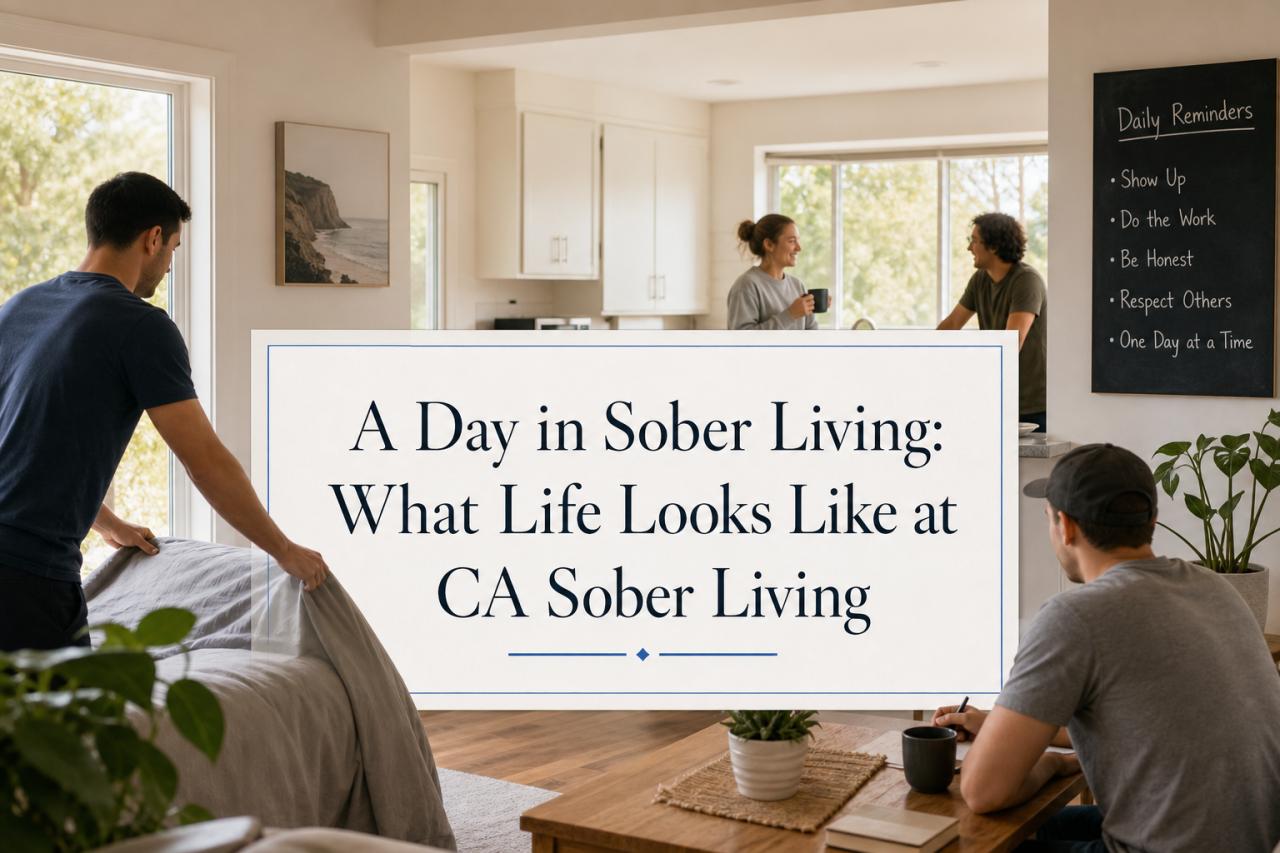
What a day in sober living looks like at CA Sober Living in Orange County, including wake-up times, chores, work and outpatient hours, meetings, curfews, testing, and what a recovery residence does and does not provide.

Sober living near me in Orange County: what a recovery residence is, typical house rules, what drives monthly rent, and how to reach CA Sober Living at (949) 801-5645.
Families comparing sober living and halfway houses in California should check referral path, rules, oversight, cost, and what happens after a rule break.
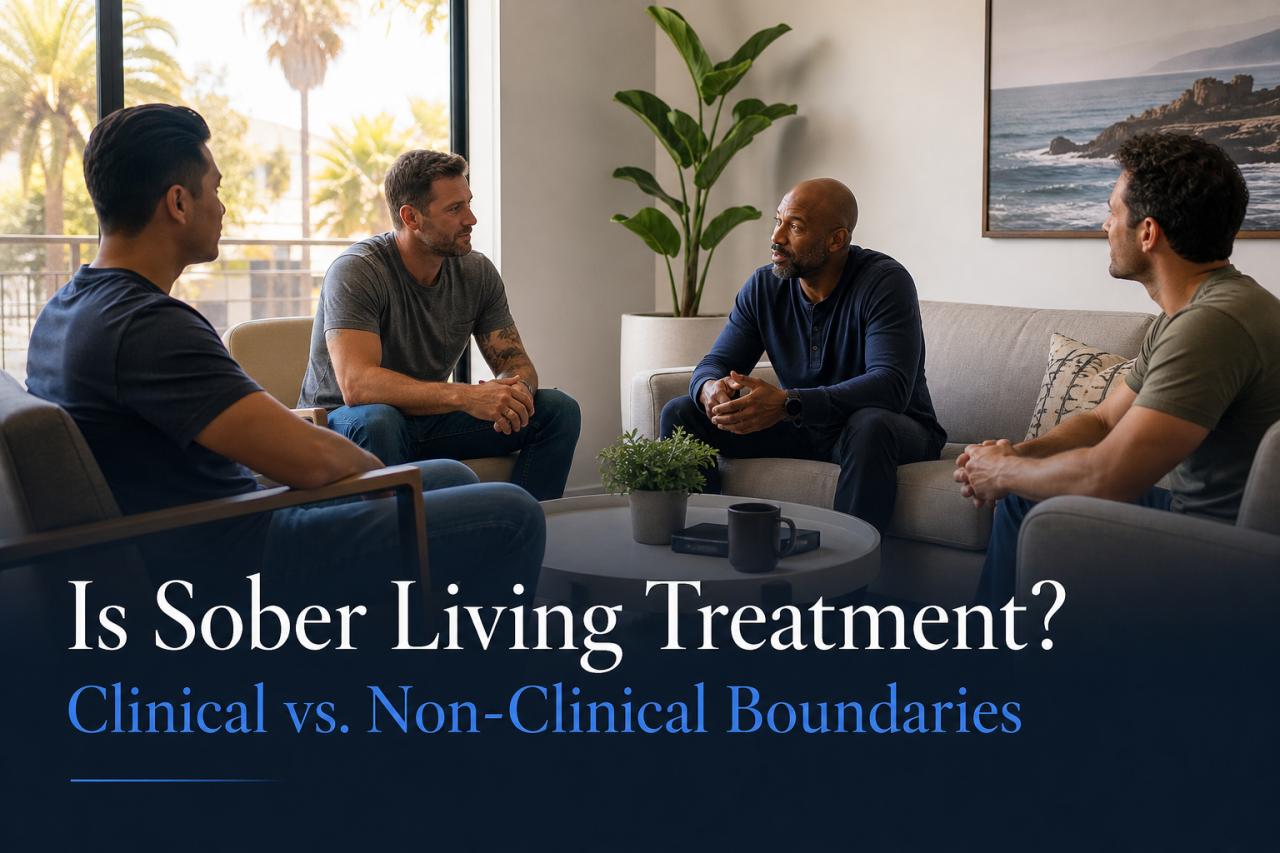
You'll see where sober living housing ends and clinical treatment begins, so you can decide what to line up before move-in.
CA Sober Living offers client-centered services. Reach out for a confidential consultation and see exactly how we'd apply these strategies to your facility.