California's Department of Health Care Services licenses facilities that deliver treatment, meaning detox, counseling, and clinical programming, and it does not license homes that provide only alcohol- and drug-free housing. That single distinction settles most of the confusion behind the question "are sober living homes licensed in California, " and it matters because families often assume a state license guarantees quality. A sober living home operates as a residence rather than a treatment provider, so the state treats it more like a shared house than a clinic.
That doesn't mean anything goes. A home that starts offering services that look like treatment, including structured therapy or medical supervision, crosses a line the state does enforce. Homes that stay on the housing side of that line answer to their own house rules, to voluntary certification standards if they pursue them, and to the same local laws as any other residence. You can verify some of this on paper, and you can verify the rest by asking direct questions before you move in.
We run recovery residences in Orange County, and we take calls every week from parents who thought a license would do the vetting for them. It won't, at least not here. This piece explains where the state draws the line, what voluntary certification actually checks, how a residence is typically priced, and how our own homes operate.
Why California Regulates Treatment Facilities but Not Sober Living Homes
The line is drawn by what happens inside the house, and never by the sign on the door. Under state law, the Department of Health Care Services (DHCS) licenses residential programs that provide detoxification, one-on-one or group counseling, treatment planning, or educational sessions tied to recovery. You can read how the state defines those services on the DHCS licensing and certification page. If a residence provides any of them, it needs a license, and if it provides a bed, house rules, and peer accountability, it doesn't.
Families calling around Orange County often blur three different things together. Detox handles withdrawal under medical supervision, residential treatment delivers daily clinical care, and sober living is structured housing for adults who have finished or are actively attending treatment and need a stable, substance-free place to live while they rebuild routines. At CA Sober Living we sit squarely in that third category. No clinical care happens under our roof, which is exactly why we hold no DHCS license, and any operator who claims a license for pure housing is either confused or misleading you.
There is also a legal reason the state treats these homes as housing rather than health care. People in recovery from substance use disorder are protected under the federal Fair Housing Act, which the U.S. Department of Housing and Urban Development explains on its disability rights page. Cities can't zone recovery housing out of residential neighborhoods because of who lives there, and the state can't require a medical license for a household that isn't practicing medicine.
So when you ask an operator whether the home is licensed, the honest answer from anyone who doesn't provide treatment should be no, followed by an explanation of what standards they follow instead. Any other answer tells you something about the operator. If you'd rather talk it through than read on, our admissions team answers at (949) 801-5645.
Are Sober Living Homes Licensed in California? The DHCS Line Between Housing and Treatment
No, sober living homes in California are not licensed, because the state licenses treatment and a sober living home does not provide it. The California Department of Health Care Services licenses and certifies alcohol and drug programs, and its authority attaches to specific clinical services rather than to the population being housed. A home that offers a bed, house rules, drug testing, and peer accountability sits on the unlicensed side by design, and that has been the state's position for years.
The practical test is what staff actually do. If a staff member is diagnosing, running clinical groups, or writing a treatment plan, the operation needs a DHCS license and running one without it is illegal. If residents live together under an agreement to stay abstinent, attend outside meetings or an outpatient program, and follow curfews and chores, the home is housing. California treats it the same way it treats any other group of unrelated adults renting a residence together.
Families often find this unsettling at first, and in some cases the worry is fair. No license means no state inspector is walking through a sober living home's bedrooms or reviewing its testing policy. The questions you ask an operator therefore carry more weight here than they would at a licensed facility, where the state has already asked many of them for you.
Our own position on that line is easy to state. CA Sober Living provides structured housing in Orange County, and residents who need therapy or medical care get it from licensed providers in the community, then return to an accountable home each night. If you want to walk through exactly what our houses do and don't provide before making a decision, call (949) 801-5645 and we'll answer plainly.
Voluntary Certification, House Rules, and the Questions Worth Asking Before You Move In
Certification for California sober living homes is voluntary, so the standards you'll actually live under come from the operator's own house rules and from the questions you ask before you sign anything. The closest thing to an outside check is certification through a recognized recovery-residence organization, which measures a home against published standards for safety, resident rights, and house management. Some operators pursue it, but nobody is required to hold it to rent beds to people in recovery.
That gap puts real work on you and your family. One house can call itself sober living and offer nothing beyond a shared lease, while another down the street runs curfews, drug testing, mandatory meeting attendance, and a house manager who lives on site. Both are legal, and you will not be able to tell which is which from a website photo.
Ask how often residents are tested and what happens after a positive result. Ask who is in charge overnight and whether that person sleeps in the house. Ask what the rules say about visitors, work or school requirements, and how long people typically stay, and ask what a move-out looks like if things go wrong, because a home that can't answer that clearly hasn't thought it through. SAMHSA's guidance on recovery housing describes the peer support, accountability, and stable environment a legitimate residence should provide, and it's a useful benchmark when you compare answers (SAMHSA recovery housing resources).
Cost belongs on that list too. Sober living in Orange County is generally paid privately, month to month, and the price should track the level of structure and the neighborhood rather than a vague promise of results. If someone quotes you a number without explaining what it covers, keep asking until they do.
We would rather you interrogate our rules than move in on trust alone. Call (949) 801-5645 and put every one of those questions to our admissions team, and if the answers don't hold up you'll have learned that before you packed a bag.
What a Recovery Residence Costs and How CA Sober Living Runs Its Orange County Homes
A recovery residence in California is priced the way housing is priced, so you'll typically pay a flat monthly rent that covers a bed, shared common space, utilities, and house oversight, with no per-day clinical rate attached. Detox and residential treatment bill for medical and therapeutic services, and insurance often participates in those costs, while sober living rent almost always comes out of pocket. Prices across Orange County vary with the neighborhood, whether the room is private or shared, and how much on-site staffing the house provides, so we won't quote a single number here. Ask any operator for the full monthly rent, the move-in deposit, and what happens financially if you leave early or are asked to leave. If a house can't give you those terms in writing, keep looking.
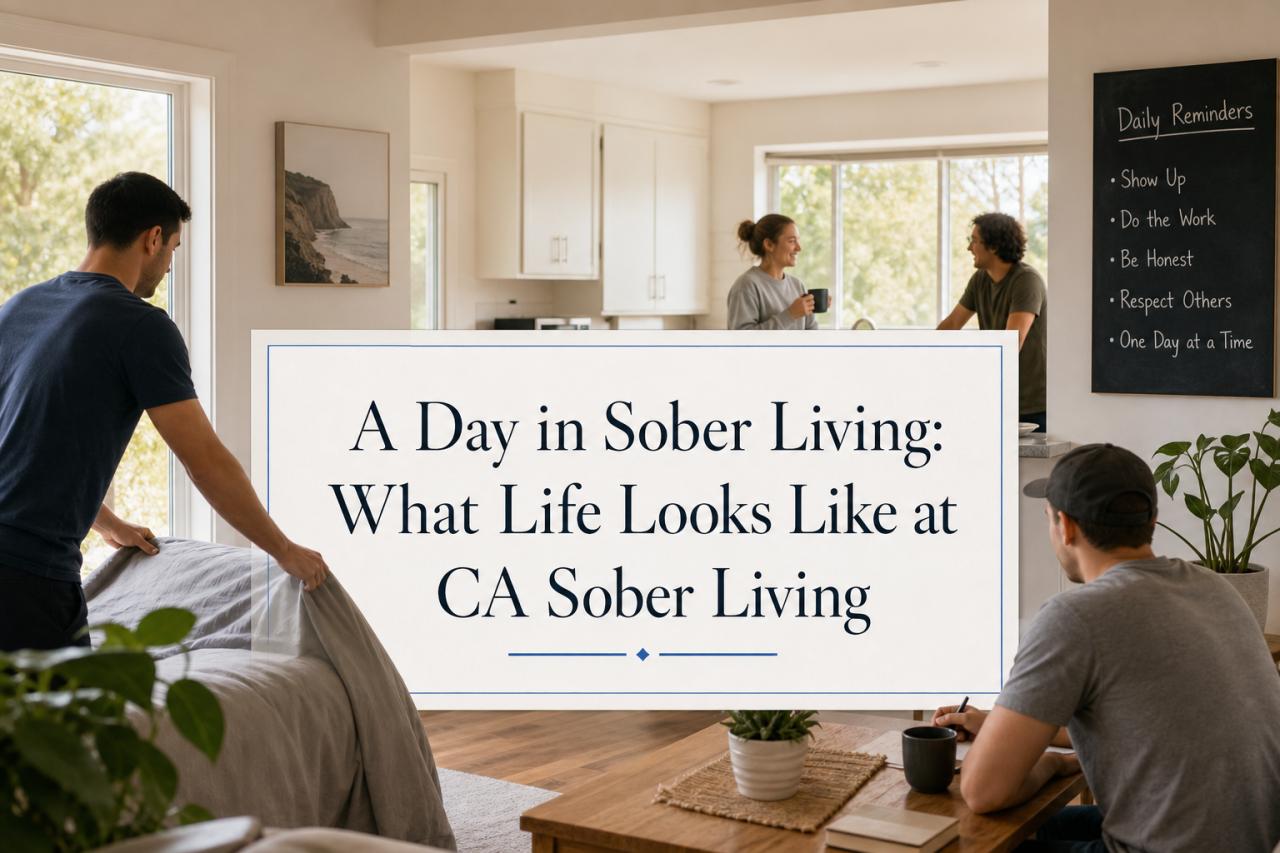
CA Sober Living operates multiple recovery residences across Orange County, and each one is a home with rules. We'll tell you on the first phone call that detox, medical care, and clinical counseling all happen elsewhere. What happens in our houses is daily structure, meaning residents stay sober, follow expectations around curfews and shared responsibilities, and keep up with outside work, school, or outpatient treatment. House managers hold residents to those expectations every day, and the expectations are the same whether you arrive from a treatment center or from your own front door.
Because the homes sit in different parts of the county, we can usually match you to a house based on where you work, where your outpatient provider is located, and how much structure you need in your first weeks. We'll walk you through current availability, monthly cost, and house rules when you call (949) 801-5645, and you can review the basics at https://casoberliving.com before you reach out. Families are welcome on that call. Many of the people who contact us are parents or spouses researching on someone else's behalf, and we'd rather answer hard questions up front than have you discover a gap after move-in.
FAQ: California Sober Living Licensing Questions Families Ask Most
Does the State of California license sober living homes?
No, California doesn't issue a license for sober living homes, because a recovery residence provides housing and structure rather than treatment. The California Department of Health Care Services licenses residential facilities that deliver detox, counseling, or other clinical services, and you can read how the state draws that line on the DHCS licensing and certification page. A sober living home that began offering clinical care on site would cross into licensed territory, which is why a legitimate recovery residence keeps treatment separate and refers residents out for it.
If a home isn't licensed, how do I know it's legitimate?
Look for voluntary certification and for written house rules you can hold in your hand before anyone moves in. Certification programs in California measure recovery residences against published standards for safety, resident rights, and house management, and a home that has gone through that process can show you the paperwork. Beyond certification, ask to see the drug testing policy, the curfew, the fee schedule, and the discharge process. If the answers change depending on who picks up the phone, keep looking.
Is a sober living home the same as a halfway house?
They overlap in purpose but differ in how residents arrive and who runs them. A halfway house is usually tied to the criminal justice system or a court order, and residents often live there as a condition of release. A sober living home like ours is voluntary, privately operated, and open to adults who have completed treatment or are stepping down from a higher level of care. You choose to be there and you can leave, though leaving early usually means giving up the structure that made the stay worthwhile.
Can I use insurance to pay for sober living in Orange County?
Insurance rarely covers the housing portion of a recovery residence, since rent isn't a medical service. Many residents attend outpatient treatment that insurance does cover while paying sober living rent out of pocket, and that combination is common across Orange County. When you call (949) 801-5645, we'll spell out what our monthly fee includes so you can plan around it rather than finding surprises after move-in.
What happens if a resident returns to use in a sober living home?
A return to use triggers the house policy, and you should know that policy before you sign anything. Some homes discharge immediately, some allow a return after a documented re-entry step, and some require a higher level of care before a resident can come back. We'll explain our own approach during the admissions conversation, because the right answer depends on the situation and a blanket promise either way wouldn't be truthful. SAMHSA's recovery housing guidance is a useful outside reference for what a fair, safety-first policy on recurrence tends to look like.
Who can I contact in Orange County if I have a concern about a sober living home?
Start with the operator directly, then escalate to the certifying body if the home carries a certification. For a home that appears to be providing treatment without a license, DHCS accepts complaints about unlicensed facilities. For neighborhood or code concerns, your city's code enforcement office is the right first call. Keep a record of dates and conversations whichever route you take.
Ready to get started?
Contact our team today to learn more. We operate recovery residences across Orange County, CA, and we'll answer your questions about rules, cost, and fit before you commit to anything. Call (949) 801-5645 or Contact Us.