
Guides
September 29, 202612 min read
What Is a Recovery Residence in Orange County?
California does not license recovery residences as treatment facilities because no treatment happens inside them.
CSL
CA Sober LivingWhat a day in sober living looks like at CA Sober Living in Orange County, including wake-up times, chores, work and outpatient hours, meetings, curfews, testing, and what a recovery residence does and does not provide.
CA Sober Living
Editorial Team
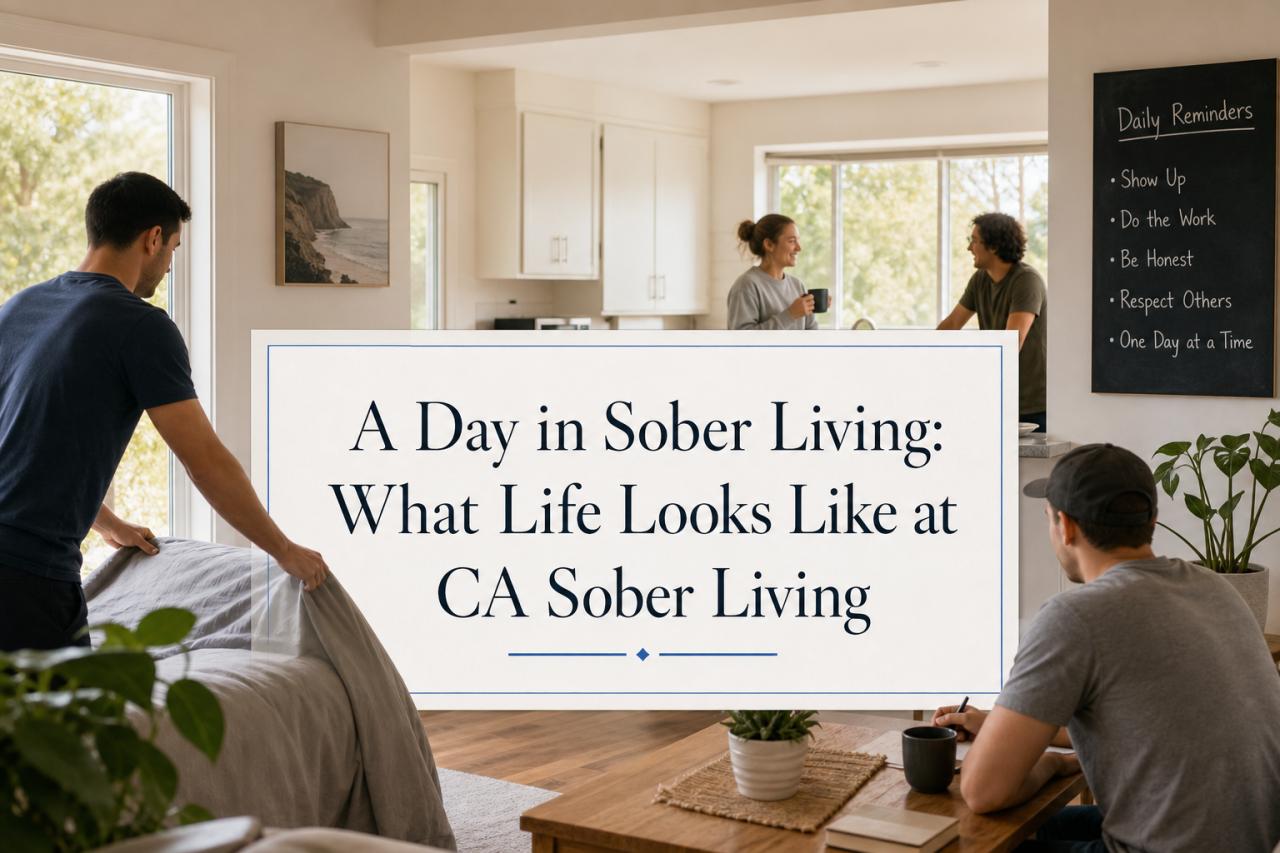
What a day in sober living looks like at CA Sober Living in Orange County, including wake-up times, chores, work and outpatient hours, meetings, curfews, testing, and what a recovery residence does and does not provide.
Medical detox belongs in a licensed facility with nurses on shift, and knowing that before you call saves your family a wasted afternoon and a hard conversation. CA Sober Living covers the part that comes after the clinical work, a structured home in Orange County where the routine itself is the treatment. A day in sober living looks less like a hospital schedule and more like a well-run household where people notice when you do not show up.
If you are weighing this step for yourself or someone you love, the daily rhythm tells you more than any brochure. You want to know when residents wake up, who checks the chores, how the house handles work and outpatient appointments, and what actually happens when someone misses curfew or tests positive. Those details show whether a house can hold someone steady in the weeks when old patterns push back hardest.
Below we walk through a typical day in our houses from the first alarm to lights out, and we are direct about what a recovery residence can and cannot do for you. If a question comes up that we have not answered, our admissions team at (949) 801-5645 will give you a straight answer. The day starts early, and it starts with everyone in the house doing their part.
Weekday mornings at a CA Sober Living house run on a set wake-up time, and everyone is expected to be up, dressed, and moving before the day's obligations begin. That is the first thing families notice when they tour one of our Orange County residences. Because we are a recovery residence rather than a detox or treatment center, the structure comes from a house manager and a posted schedule instead of clinical staff. Nobody is taking your vitals at dawn. The residents hold each other to the schedule.
The wake-up rule exists for a practical reason. Most people arriving from treatment have not kept a consistent morning routine in a long time, and sleeping until noon is one of the fastest ways to drift back toward old patterns. A fixed start time also gives you a reason to get to bed at a reasonable hour, which is part of why our houses keep an evening curfew.
Chores come next, and they are assigned rather than optional. Each resident carries a rotating responsibility such as the kitchen, the shared bathroom, trash, or the yard, and the house manager checks completion so that unfinished work gets handled the same day. It sounds small, but shared chores test accountability in a way group therapy cannot replicate. You either did your part or you did not, and your housemates know which.
After chores, the house empties out. Residents are expected to be productive during the day, which usually means a job, a job search, school, volunteer hours, or outpatient sessions arranged with an outside provider. Sitting around the house all day is not an option, and the house manager will ask about your plan if you do not have one yet.
If you are comparing residences, ask each operator directly what the wake-up time is, how chores are enforced, and what counts as a productive day. We will answer those questions for any of our Orange County houses when you call. The morning routine tells you more about a house than the photos do.
A recovery residence gives you a drug-free and alcohol-free home with house rules, peer accountability, and a stable place to rebuild a routine, and it does not give you medical withdrawal management or hospital-level care. That distinction matters for anyone planning the next step after treatment in Orange County, and we would rather state it plainly than let you find out on move-in day.
Detox is a clinical service. It involves medical monitoring while your body clears substances, and it belongs in a licensed facility with nurses and physicians on hand. Residential treatment adds daily therapy, case management, and clinical oversight on top of that. CA Sober Living sits after both of those stages. Our houses are where you live once the acute work is done and you need structure while you return to jobs, school, family obligations, and outpatient care.
What we do provide is the environment those clinical programs assume you will have when they discharge you. That means a curfew, expectations around meetings and daily responsibilities, drug and alcohol testing, shared chores, and housemates working toward the same goal. It means a house manager who notices when you are slipping and a community that holds you to the agreements you signed on day one. SAMHSA describes recovery housing as a bridge between formal treatment and independent living, and that is the role we fill.
What we do not provide matters just as much. We do not prescribe or administer medication, though residents manage their own prescriptions under house guidelines. We do not run group therapy in the living room, and we do not replace your therapist, psychiatrist, or outpatient program. Keeping those appointments is a condition of living here.
If you are not sure which level of care fits your situation right now, that is a reasonable place to be. Call our team at (949) 801-5645 and describe where you are in your recovery. We will tell you honestly whether a recovery residence is the right next step or whether you need a clinical program first.
Afternoons at CA Sober Living belong to obligations outside the house, because a recovery residence exists to hold you accountable to a real schedule rather than to fill your day for you. After morning chores and check-ins, most residents leave for a job, a class, an outpatient program, or a job search that we expect to see progress on. An empty afternoon gets treated as a problem to solve.
If you are stepping down from treatment, your clinical care continues with your outside provider, and our job is to make sure you actually get there. There is no intensive outpatient program inside the house, and a house manager is no substitute for a licensed counselor. Our role is coordination, which means knowing your program hours, confirming attendance when you have signed a release, and flagging missed sessions early instead of waiting for a return to use to reveal the pattern. Orange County keeps this practical, since residents can reach local outpatient programs, employers, and community colleges without a long commute.
Work matters for a reason beyond rent, and rent is real. Residents pay for their housing, so holding a job or securing income is part of staying in good standing rather than an optional goal. For residents who are not employed yet, the afternoon is structured around applications, interviews, and appointments, with a defined check-in on what got done.
Meetings anchor the back half of the day. We expect regular attendance at 12-step or comparable mutual-help meetings and, in most cases, an active sponsor or equivalent support relationship. That expectation follows the peer-support model described by SAMHSA, and it is the piece that keeps a sober house from becoming a quiet apartment with drug tests. Residents usually head out to meetings in the late afternoon or early evening, often together, and curfew is set so that getting home afterward is realistic.
If you are comparing houses, ask each one how it verifies these afternoon commitments. We will walk through exactly what we check and how often for any house you are considering.
Evenings in our Orange County houses run on a curfew, random drug and alcohol testing, and a house meeting where residents hold each other to the agreements they signed at move-in. That is the structure, and we would rather you know it before you call than discover it after you have unpacked.
Curfew comes first because it is the rule families ask about most. Each house sets an evening return time, typically earlier for newer residents and later once you have shown up consistently for work, outpatient appointments, and meetings. If you are going to be late for a legitimate reason, you tell the house manager before curfew, not after. Communicating ahead of time instead of explaining afterward separates the residents who do well here from the ones who leave early.
Drug and alcohol testing happens on a random schedule and for cause. You will not know the day, and you will not be singled out, because everyone in the house is subject to the same policy. Since we are neither a detox nor a hospital, testing serves to keep the home safe for every person sleeping under that roof. A positive result triggers a conversation with staff about what happens next, and that response depends on the situation and the house agreement you signed.
The evening house meeting is where peer accountability actually lives. Residents check in on how the day went, chores get reviewed, and conflicts about shared space get addressed directly rather than left to fester. You will hear people call each other out when someone skipped a meeting or missed a commitment, and you will also hear them notice when someone finally landed a job. It is ordinary and honest, and most residents tell us it is the part of the day they did not expect to value.
After the meeting, the house winds down. Some residents head to a late recovery meeting, while others cook, watch something together, or call family. Quiet hours follow, and the day ends the way it started, with a few clear expectations everyone already understands.
If you want the specific curfew and testing policy for a particular house, call us at (949) 801-5645 and we will read it to you line by line.
No. CA Sober Living operates recovery residences in Orange County, and we do not provide medical detox or hospital-level care. Our houses are where you live after clinical work is underway, with structure, accountability, and peers who are also staying sober. Many residents attend outpatient treatment during the day and come home to the house in the evening. If you need medical detox first, we will tell you plainly when you call (949) 801-5645.
A day in sober living at our houses runs on a predictable rhythm of wake-up times, house responsibilities, recovery meetings, and a curfew. Most residents spend the middle of the day at work, school, outpatient programming, or a job search. Evenings bring house meetings, chores, and time with housemates before curfew. Weekends are looser but still structured, with expectations around meeting attendance and check-ins. The routine removes decisions during the hours when the risk of returning to use tends to be highest.
Every CA Sober Living house requires abstinence, random drug and alcohol testing, curfew compliance, meeting attendance, and participation in chores and house meetings. Rules are the same for everyone in the house, and residents know them before move-in. A positive test or a serious violation can result in a required move-out, because one person using puts every other resident at risk. Smaller issues like a missed chore or a late return are handled with the house manager and usually lead to a conversation and a corrective plan.
Sober living is typically paid privately as a monthly housing fee, and insurance rarely covers it because it is housing rather than clinical treatment. Pricing at our houses varies by location, room type, and length of stay, so we quote it directly rather than publish a single number. When you call, we will give you the actual figure for the house you are considering, along with what is included. We would rather you hear a real amount from us than guess from a generic range online.
Length of stay varies by resident, and we do not set a required minimum or maximum for everyone. Some people stay a few months while they stabilize a job and a routine, and others stay longer because the structure keeps working for them. National guidance from SAMHSA on recovery housing frames it as a bridge between treatment and independent living, and that is how we think about it too. You leave when you have a stable place to go and a daily routine that holds without the house around it.
Yes. Families can stay in contact, and visits are welcome within house guidelines and scheduled hours. We ask that visitors respect the shared space and never bring alcohol or other substances onto the property. Many families tell us the hardest part of early recovery is not knowing what a day looks like, so we encourage open communication between residents and the people supporting them. If you are a parent or spouse researching options, you are welcome to call us directly with your questions.
Call (949) 801-5645 or visit https://casoberliving.com, and we will answer your questions about any of our Orange County houses.
**Contact Us**
In This Article
Tags
California does not license recovery residences as treatment facilities because no treatment happens inside them.

Sober living near me in Orange County: what a recovery residence is, typical house rules, what drives monthly rent, and how to reach CA Sober Living at (949) 801-5645.

Is sober living right after rehab the right move for your family member? What an Orange County recovery residence is, typical house rules, how rent works, and how to decide.

California licenses treatment facilities, not sober living homes.

Families comparing sober living and halfway houses in California should check referral path, rules, oversight, cost, and what happens after a rule break.

You'll see where sober living housing ends and clinical treatment begins, so you can decide what to line up before move-in.
CA Sober Living offers client-centered services. Reach out for a confidential consultation and see exactly how we'd apply these strategies to your facility.