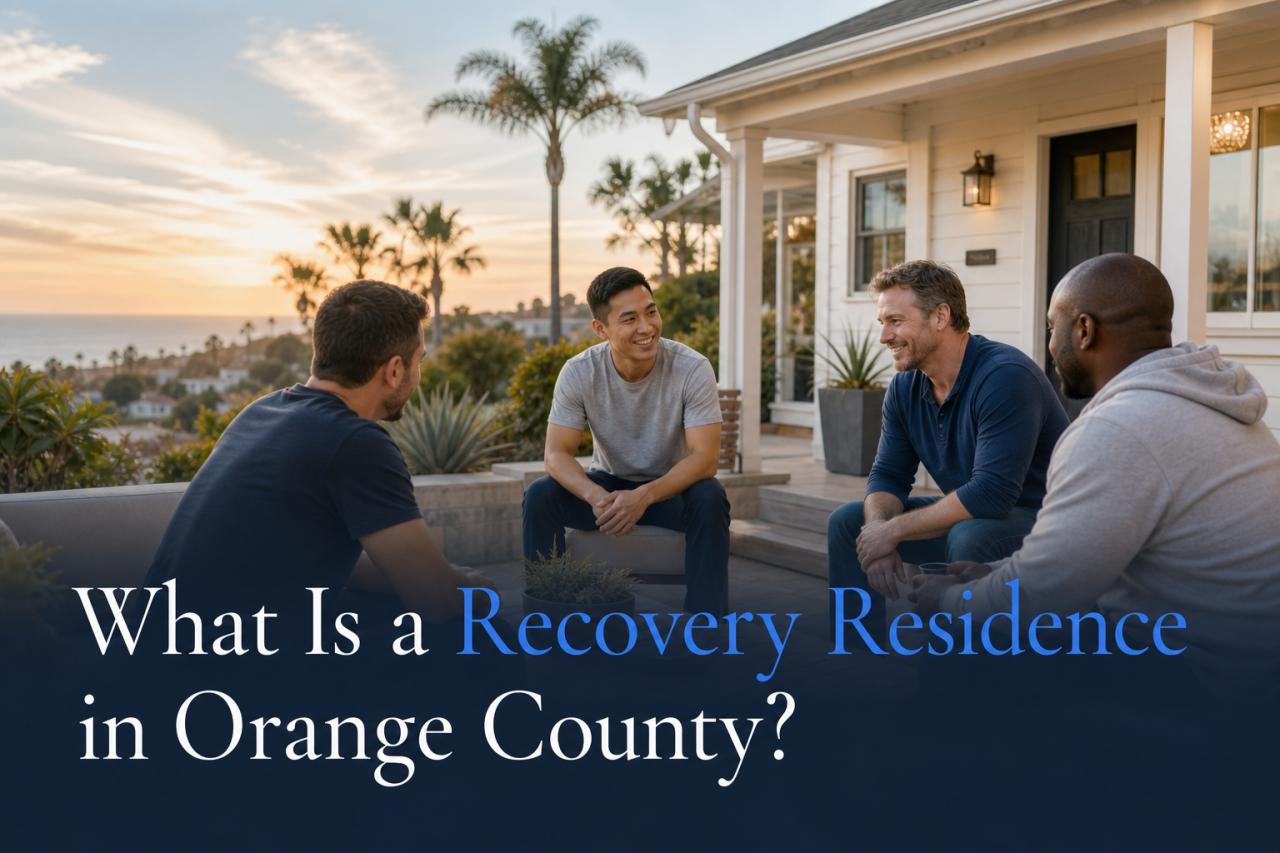
Leaving treatment without structured housing puts sobriety back on an untested home, an old neighborhood, and whatever routine you had before. Families in Orange County then have to sort transitional living vs sober living, two labels that get used as if they mean the same thing. They don't.
We run recovery residences, not detox and not hospital care. You're choosing housing with expectations, peer accountability, and room to rebuild work, school, and family life after the structured schedule of treatment is no longer there every hour. Clinical work stays with licensed treatment. Daily life stays in the house.
CA Sober Living serves adults in Orange County who need that next step. Call (949) 801-5645 when you want a straight answer on fit before anyone moves in.
Sober Living Is Recovery Housing, Not Detox or Hospital Care
Sober living is recovery housing, a structured, alcohol- and drug-free home with house rules and peer accountability, not a detox unit or hospital ward that provides medical withdrawal care. That distinction drives most of the confusion around transitional living vs sober living for families in Orange County. You live in a house. You don't check into a ward.
We operate recovery residences. We don't operate a hospital. You won't find IV therapy, nursing rounds, or medically supervised detox inside a CA Sober Living home. Those services sit at a different level of care. If you still need withdrawal management, get that care before you look at housing. Housing is for people stable enough to share a kitchen, follow a curfew, and keep a house agreement.
The National Institute on Drug Abuse describes recovery as a long process that continues after formal treatment ends. A recovery residence supports that process. It doesn't replace a physician. If you still need clinical services, start with SAMHSA or your treatment team, then look at housing.
Rules are the product. Drug tests, chore lists, guest policies, and quiet hours keep the environment safe for everyone in the house. They're not extras you can skip. Some transitional living programs add case management, vocational coaching, or a fixed end date that makes the stay feel like a program. Our houses in Orange County are homes with structure. Rent is what you pay. You live with others in recovery. The agreement you signed is the one you keep.
Cost is rent, not a hospital bill. We won't invent a price band. Fees vary by house and room. Call (949) 801-5645 and ask what a specific home includes. The honest scope is simple. You're choosing recovery housing after treatment, not buying medical care.
Transitional Living vs Sober Living: Rules, Oversight, and Daily Life
In Orange County, CA, the live difference in transitional living vs sober living is how a house writes rules, who enforces them, and how much of your week is peer-run versus staff-directed. Both labels show up after treatment. Neither one is detox. Neither one is hospital care. The names still do not produce the same day.
Sober living is recovery housing. You share a home with other people staying sober, you follow a written rule sheet, and you stay accountable through testing, chores, curfews, and meeting attendance. Oversight is usually a house manager and the people you live with, not a nursing desk. Days look closer to ordinary adult life with guardrails. Jobs, job hunting, or school fill the week. You cook, clean, and keep common space usable. Staying substance-free and participating is expected. Relapse is a house issue, not a medical admission.
Transitional living is a looser phrase. Some programs mean a time-limited stay with more case management, scheduled groups, and tighter check-ins. Others use it as another word for sober living. Families hear “transitional” and picture a clinical step-down. Plenty of residences are still housing with structure. Federal material from SAMHSA treats recovery housing as support around care, not as a substitute for treatment you already finished.
Ask for the actual week, not the brochure title. Who lives on site. How testing is handled. Whether overnight passes exist. What happens if someone uses. How chores and meetings get enforced. Those answers decide daily life. A time-capped program with staff-led groups will feel different from an open-ended recovery residence that expects work, peer accountability, and a quieter house rhythm.
We operate recovery residences in Orange County, not a hospital unit. Call (949) 801-5645 if you want a plain read on how our houses run so you can match the setting to the person leaving treatment.
What Orange County Families Should Verify Before You Move In
Orange County families should verify written house rules, drug testing, curfew, staffing, monthly cost, and whether a home is a recovery residence rather than a detox or hospital before anyone signs a resident agreement. Those checks also clarify transitional living vs sober living, because the two labels don't guarantee the same rules or the same length of stay.
A recovery residence is housing with accountability. It's not medical care. You'll want that distinction in plain language from the operator. Ask who lives in the house, who enforces the rules, and what happens after a failed test. Get the answer in writing. If the pitch sounds like a clinic, keep asking until the scope is honest.
Ask how you pay and what a weekly or monthly rate covers, including deposits and what's not included. We'll walk you through that on a call at (949) 801-5645. Come with a list. Don't accept a vague quote if you need a number to plan.
Confirm the city, parking, work or school expectations, and how long a resident can stay. Transitional programs sometimes set a clock. Many sober living homes keep structure without a hard end date, as long as you follow the rules. Verify that before you move boxes.
Meet the house if you can, and talk with staff before you sign. Read the resident agreement. SAMHSA describes recovery housing as a support, not a substitute for treatment. That framing should match what you hear from us about our Orange County homes. If it doesn't, keep looking.
How CA Sober Living Houses Support Life After Treatment
CA Sober Living houses in Orange County support life after treatment by giving you a recovery residence with rules, testing, and peer accountability instead of a hospital stay or a detox bed. That's the job. You've already done the clinical work, or you're still in outpatient care. You need a home that will not quietly tolerate use.
People comparing transitional living vs sober living often want the same thing. A next address. Some structure. A shot at work and family without sliding back into the old neighborhood pattern. We run multiple recovery residences here, and we keep the framing honest. These houses do not treat withdrawal. Nobody on site writes prescriptions. Residents are people who have chosen sobriety and who agree to live by house standards. The Substance Abuse and Mental Health Services Administration describes recovery housing as alcohol- and drug-free homes with peer support. That's our lane, not a hospital floor.
Those standards aren't decorative. Curfews, chores, meeting attendance, and screening for drugs and alcohol keep the house safe for everyone in it. If someone can't meet that bar, they can't stay. Families in Orange County should hear that before they tour. It's kinder than a soft pitch.
Daily life is yours to rebuild. You cook, commute, look for work, and keep your own calendar. The house holds the line on sobriety while you do that work. A roommate in recovery. A manager you can reach. People who notice when someone starts isolating. Orange County has plenty of nightlife, traffic, and old contacts, and structure is what makes a regular street address usable in early recovery when those things sit a few miles from the front door.
Call (949) 801-5645 if you're leaving treatment and need that next step. We'll tell you what a given house expects on day one, how admissions works, and whether our network is the right fit. Ask about curfew, testing, and work rules before anyone packs.
FAQ: Transitional Living vs Sober Living in Orange County
What is transitional living vs sober living?
Transitional living vs sober living usually names overlapping recovery-residence models, not two different medical programs. Sober living stresses abstinence, testing, and peer accountability in a shared home after treatment. Transitional living often stresses the move from a facility back into ordinary community life. Labels overlap. The comparison that matters for your family is the house rules, who is actually on site, and whether anyone is offering medical or clinical care under the same roof as the bedrooms.
Does sober living include detox or hospital care?
No, CA Sober Living provides recovery residence housing in Orange County, CA, not detox, inpatient treatment, or hospital services. If withdrawal or 24-hour medical monitoring is still needed, that work belongs in a clinical setting first. The ASAM Criteria describe levels of care for treatment. A sober living house sits beside that system as housing, not inside it as a substitute hospital.
What rules apply in a recovery residence?
Abstinence, accountability, and participation in house life are the core rules, because residents share a home and a recovery standard. You should expect drug and alcohol testing, chores, and clear consequences if someone uses. Curfew and meeting details vary, and we explain them before move-in. A recovery residence is not a hotel and not a locked ward. You get more freedom than treatment. You also carry more of the daily load.
Who should consider sober living after treatment?
Adults who have finished detox or residential treatment and need a structured, substance-free home in Orange County are the people this housing is built for. Families usually call when the clinical stay is ending and the next address still matters. You should be able to live with others, follow house standards, and keep outside obligations like work or outpatient care. We screen for fit. We won't quote invented outcome rates.
Can I work, go to school, or attend outpatient care while I live there?
Yes, recovery residences are homes, so residents commonly keep jobs, classes, and outpatient appointments while they live in the house. That's part of the point after treatment. Structure still applies when you are on the property. SAMHSA treats recovery housing as support around treatment, not a replacement for it.
How do I apply to CA Sober Living?
You start by calling (949) 801-5645 and telling us where you or your family member is in the process, including recent treatment and what structure you need next. We'll explain current house expectations and whether a recovery residence is the right step. Have recent treatment dates ready on that call. You can also review our site at https://casoberliving.com.
Call (949) 801-5645 if you want a recovery residence in Orange County after treatment.