CA Sober Living runs four programs, and the right one depends on where the person is after detox. If you're working out how to convince someone to go to sober living, the strongest thing you can bring is a plain description of what the house is, what it asks of residents, and what it doesn't try to be.
CA Sober Living operates recovery residences for people who have finished detox or inpatient treatment and need structure before going back to independent life. The homes are built to feel like homes, with a coastal-inspired design and a nutrition-focused kitchen, and residents can keep up work and personal commitments, including remote work that needs a dedicated workspace. They are not medical facilities, and your loved one will probably ask about that first.
This guide covers what to say, what to expect from house rules, and how to talk about cost, length of stay and keeping a job. Where a figure changes by program, we send you to admissions at (949) 801-5645 instead of guessing.
A simple framework helps. Before you speak, settle four things: what the house is, what it requires, what it costs, and what you will do if the answer is no. Each section below covers one of them, so you can check your own preparation against it. A call to admissions is the best preparation, since the team can answer program-specific questions that no general guide can.
What a recovery residence is, and why it isn't detox or a hospital
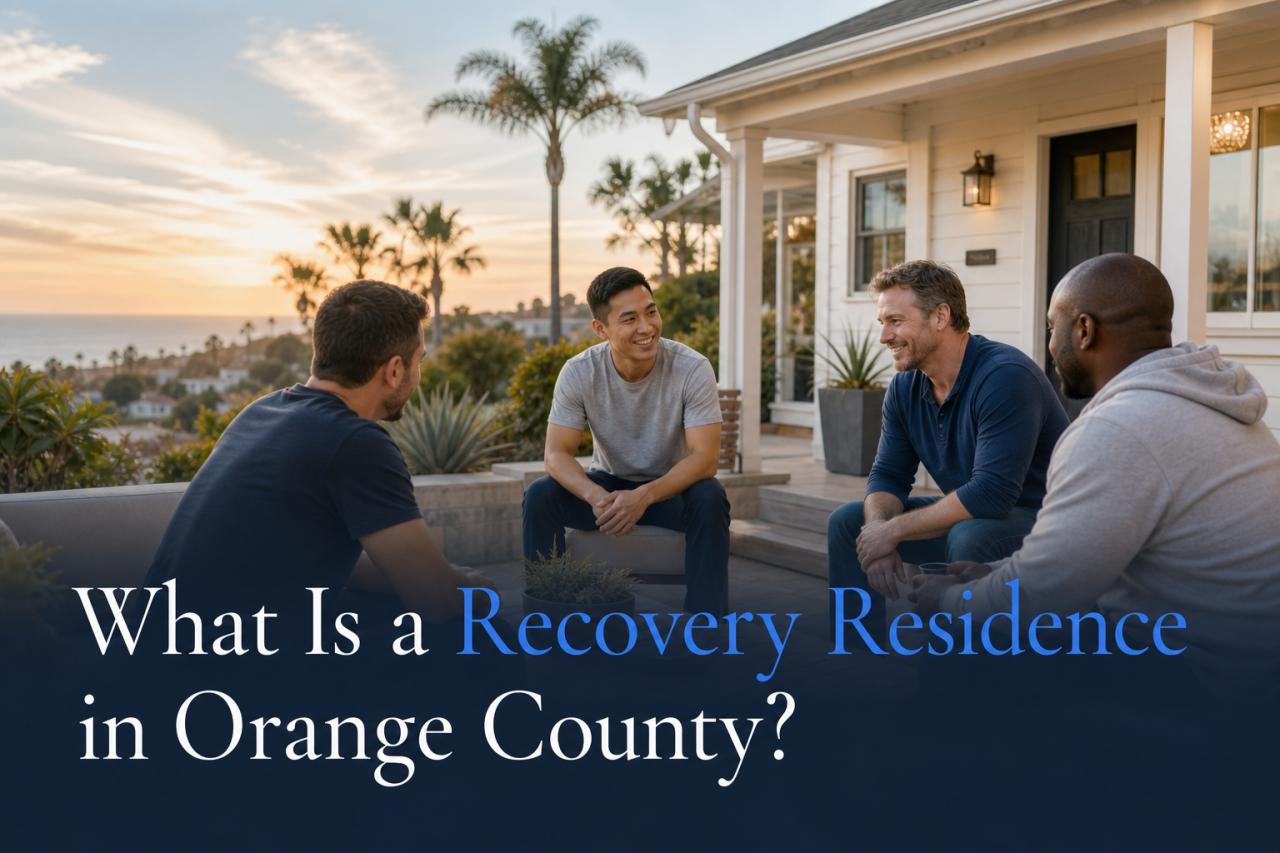
A recovery residence is a staffed home where people live together while they keep building sobriety after treatment. It does not provide medical detox or hospital-level care. CA Sober Living describes its homes as structured, supportive housing that bridges the gap between clinical treatment and independent living. Many people picture a locked ward or a clinic and reject the idea before hearing what the housing involves, so this distinction matters.
Your loved one would live in a house that feels like a home rather than a facility. The residential model is built for people who want to keep up professional and personal commitments, and remote professionals can have a dedicated workspace. Depending on the program, house expectations include a structured daily schedule, 12-step meeting attendance, random drug and alcohol testing, and peer group meetings.
The right starting point depends on where your loved one is in recovery. Services are organized as four programs that each build on the last: Post Detox, Sober Living, Supportive Living and Transitional Living. Post Detox is for people moving directly from detox or inpatient treatment and has the most structure. Transitional Living has the least and is the final step before full independence.
The Post Detox team includes a House Manager, Medical Liaison, Peer Support Specialist and Case Manager. The Medical Liaison coordinates with a resident's healthcare providers and supports medication management, and staff can facilitate emergency care if it is needed.
Still, being medically informed is not the same as being a medical facility. If your loved one is actively withdrawing or needs round-the-clock clinical supervision, they need detox or inpatient treatment first. If they have finished detox or treatment and need structure, accountability and peers, a recovery residence fits that stage.
Saying this plainly is often more persuasive than a sales pitch. If you're unsure which program fits, the admissions team can help determine the starting point at (949) 801-5645.
How to convince someone to go to sober living without an ultimatum
Start by describing what the house actually asks of a resident, because people resist vague fears far more than specific rules. The structure loosens at each of the four phases, so you can tell your loved one that the first phase has the most structure and the last has the least. That gives them a visible path toward more freedom, which works better than "you need to go."
Pick a calm moment when neither of you is angry or in crisis, and lead with what you've observed instead of what you're demanding. "I've noticed the last month has been rough, and I'm worried about you coming home to the same routine" invites a response. "Go or else" invites an argument and makes you the enforcer if they say no.
Be ready to answer practical objections honestly. Residents in the Post Detox program should expect mandatory 12-step meeting attendance, random drug and alcohol testing, and a structured daily schedule. Employment requirements and program lengths differ, so call (949) 801-5645 for current details. If your loved one worries about work, the homes are built for people who want to keep up professional commitments.
Give them real choices inside the decision. The intake call is confidential, and the site says a family member can join it, so your loved one can ask their own questions while you listen. They can also help decide which program is the right starting point. Ownership of even one small choice often lowers resistance more than any argument.
Finally, decide in advance what you will do if the answer is no. You can keep the door open, hold your own boundaries around money and housing, and offer to ask again later. A refusal today does not close the conversation, and a family that stays steady is often easier to say yes to the second time.
The house rules your loved one will ask about first
Most people considering sober living want to know three things first: whether they'll be tested, whether they have to attend meetings, and how much freedom they keep. At CA Sober Living the answers are yes, yes in the early phases, and it depends on the program phase, so you can answer without softening anything.
Post Detox, the first of four phases, has the most structure. Residents follow a daily schedule, attend mandatory 12-step meetings, and agree to random drug and alcohol testing. Peer group meetings are part of the week, and a case manager helps plan the next step. If your loved one pushes back on testing, explain that it protects everyone in the house, including them.
Across the programs, residents sign a house rules agreement at move-in, attend weekly house meetings, complete assigned chores, and respect curfew in the earlier phases. Alcohol, other substances, weapons and prescription medications not prescribed to the resident are not permitted. Personal phones and laptops are allowed with responsible use.
The structure loosens through Sober Living, Supportive Living and Transitional Living, which has no curfew. Sober Living pairs accountability with growing personal freedom, and Supportive Living adds greater autonomy. Telling your loved one the rules relax as they show stability is often more persuasive than describing the rules alone.
Families also ask what happens after a return to use. The site says safety comes first and that staff work with the resident to assess the situation. Depending on the circumstances, that may mean a step back to an earlier phase, a medical evaluation, or a brief return to detox. The organization says it does not simply remove residents without a plan.
Some people worry the place will feel like a facility. The homes have a coastal-inspired look, a nutrition-focused kitchen, and wellness activities such as yoga, meditation and beach walks. Be clear about scope as well. This is a recovery residence, and anyone who still needs medical detox must complete that first.
What to say about cost, length of stay, and keeping a job
Tell your loved one the truth. This article does not publish a flat price or fixed length of stay, so both should be confirmed with admissions at (949) 801-5645. Vague promises break trust faster than a hard number, and a person weighing sober living will notice if you dodge.
On cost, say what you know and what you don't. The site says costs vary by program phase and location, and that the monthly rate covers rent, utilities, house manager support, drug testing and house meetings. It also says flexible payment plans exist and that financial assistance can be discussed during the intake call. Medi-Cal and Medicare are not accepted.
Insurance deserves a separate sentence. The admissions team can help verify benefits at no cost, but sober living housing itself is typically not covered by insurance, although some associated clinical services may be. Offer to make the call together, and write down the monthly figure and what it covers before anyone commits.
Length of stay deserves the same candor. Residents move through the phases at their own pace, and the site states different lengths for some phases, so no time frames appear here. What you can say is that Post Detox has the most oversight and Transitional Living, the final step before full independence, has the least. That answers the fear of being supervised indefinitely.
Work is often the sharpest objection. The homes are positioned for people who want to keep up professional and personal commitments, and remote professionals can use a dedicated workspace. Employment requirements differ between Post Detox and Sober Living, so ask admissions what applies to the starting point your loved one would have.
A few lines tend to land better than a speech. Try "I called, and they can tell us which program fits you," or "You'd still be able to work, and the rules relax as you go," or "We'll get the cost in writing before you decide." Let them hear that the decision stays theirs and that you are only gathering facts.
FAQ: Questions Orange County families ask before a loved one moves in
Is sober living the same as detox or rehab?
No. Sober living is a recovery residence, which means your loved one lives in a house with rules, peers and accountability while going about daily life. Detox and inpatient treatment are medical settings. Post Detox is built for people who have already finished medical detox or inpatient treatment and have medical clearance. It is not a hospital, though staff are trained to recognize post-acute withdrawal symptoms and can coordinate with healthcare providers.
What rules will my loved one have to follow?
Residents follow a structured daily schedule and are subject to random drug and alcohol testing. In Post Detox, 12-step meeting attendance is mandatory, and residents join peer group meetings and wellness activities. The structure loosens across the four programs. Employment requirements differ by program, so ask admissions what applies to the phase your loved one would start in.
How much does it cost and how long will they stay?
Cost and length of stay vary by program and location, and no single figure is published here. The monthly rate covers rent, utilities, house manager support, drug testing and house meetings. Call (949) 801-5645 and the team will walk you through current rates and expected time frames for the program that fits.
Can my loved one keep working while living there?
Yes, the homes are positioned for people who want to maintain professional and personal commitments during recovery, and a dedicated workspace is available for remote professionals. Employment requirements differ between Post Detox and Sober Living, so the answer depends on where your loved one starts. Admissions can explain expectations before anyone commits.
What if we aren't sure which program fits?
The admissions team can help you decide on the right starting point. Someone leaving detox with medical clearance may begin in Post Detox, while someone with more stability may fit a later phase. You do not need to have this figured out before you call, and the intake inquiry is confidential.
What happens after they finish the program?
The programs are designed to prepare residents for independent life, and Transitional Living is the final step before full independence. Transition planning begins in the first phase, and graduates join an alumni network with meetups, mentorship and a resource network.
If you're ready to talk through your situation, call (949) 801-5645.
Ready to get started?
Reach our admissions team through the contact page, or call (949) 801-5645.
Contact Us