
Guides
October 27, 202610 min read
Sober Living Pricing Factors in Orange County
You'll see which parts of a sober living bill are set by the program and which parts come from the room, the house, and your own situation.
CSL
CA Sober LivingYou'll see which kinds of sober living financial assistance are worth asking about and what to have ready before you call.
CA Sober Living
Editorial Team

You'll see which kinds of sober living financial assistance are worth asking about and what to have ready before you call.
If you're looking for sober living financial assistance, ask each recovery residence directly what payment options it has, because help usually comes from several places at once. Your own income, family contributions, and a conversation with the residence's admissions team each play a part, and you can reach ours at (949) 801-5645.
Most people who pay for a recovery residence piece the cost together from a few sources, and it helps to know which ones are realistic before you start calling. The first is your own income. Many residents in structured sober living keep working or return to work early in recovery, and that paycheck often covers a large share of the monthly cost. Remote professionals can work from a dedicated workspace in the house.
The second source is family. Parents, spouses, and siblings often contribute directly, sometimes for the first month or two while a resident finds steady work. If several relatives are pitching in, agree on who pays what and for how long before move-in, because money confusion in the first weeks adds stress a new resident doesn't need.
The third is the residence itself. Our site says flexible payment plans are offered and that financial assistance options can be discussed during the intake call. Ask what flexibility exists, what the monthly rate covers, and what's billed separately.
A fourth source worth checking is your treatment provider. If you're coming out of detox or inpatient care, the case manager there may know about funding programs and can point you toward them. Ask before you discharge, since those conversations are easier while you're still in their care.
Sober living is housing and peer support, not medical treatment, so funding meant for clinical care may not apply to a residence stay. Ask each source what it will and won't cover, and get the answer in writing when you can.
At CA Sober Living, the monthly rate covers rent, utilities, house manager support, drug testing, and house meetings, and the site says there are no surprise charges. The homes are built to feel like a home rather than a facility, with a coastal-inspired design and a gourmet communal kitchen. It's fair to ask what each house includes before you compare prices.
The structure is part of the cost too. Residents follow a daily schedule, take part in peer group meetings, and agree to random drug and alcohol testing. Post Detox adds a House Manager, a Medical Liaison, a Peer Support Specialist, and a Case Manager. Staffing like that is a real expense, and it's one reason a recovery residence costs more than a plain rental room.
Rates differ by program phase and location, so we'd rather give you the current number on the phone than guess in print. Personal costs such as food outside the house, phone service, and transportation beyond what the house arranges are yours to plan for.
The fee doesn't pay for therapy, medication, or medical care, which stay with your own healthcare providers. Our Medical Liaison coordinates with those providers, but the clinical bills remain separate.
Ask every residence you call the same questions, then line up the answers side by side. A lower number that leaves out testing, meals, or staff support can cost more in the end than a higher one that includes them.
Your funding needs shift as you move through our four programs, because structure, staffing, and income expectations change at each phase. Post Detox, Sober Living, Supportive Living, and Transitional Living run as one continuum, and each builds on the last.
Post Detox is the first step and has the most structure. It's built for people coming straight from detox or inpatient treatment, and many arrive without steady income. If that's you, plan on family contributions or savings covering the early weeks. Employment requirements differ between Post Detox and Sober Living, so ask admissions what's expected before you count on a paycheck.
Sober Living is the second phase. It adds personal freedom while keeping accountability in place, and residents here are more likely to be working, so your own income can carry more of the monthly cost and family may be able to step back.
Supportive Living and Transitional Living give residents greater autonomy, with Transitional Living as the last step before full independence. Transitional Living eligibility includes financial stability to cover rent and living expenses, and the lease terms are flexible, including month-to-month options. Budget for more of your own day-to-day costs at these stages.
Lengths of stay vary by phase, so ask our admissions team for current program lengths and rates. Then you can map out who pays for what at each stage instead of guessing at one total. If you're unsure where to begin, the team can help you find the right starting point, and that choice shapes your first budget more than anything else.
A few facts about your situation let the admissions team give you real answers on the first call instead of a general overview. You don't need paperwork in hand, but these details will save you a second call.
Start with where you are in treatment. Tell them whether you've finished medical detox or inpatient care and whether you have medical clearance, since all residents must be medically cleared and free of substances before move-in. If you're still in treatment, have your case manager's name nearby in case the team wants to coordinate.
Next, know your budget in rough terms. Write down what you can pay each month from income or savings, what family members have agreed to contribute, and for how long. Admissions can't match a payment plan to a number you haven't worked out.
Then think about work. Be ready to say whether you have a job, are looking for one, or work remotely and need a dedicated workspace.
Last, bring your questions. Ask what the monthly rate includes, what's billed separately, and what the current length of stay is for the program you'd start in. Jot the answers down so you can compare us against any other residence on the same terms.
Intake starts with a confidential phone call with our admissions team. They'll ask about your recent treatment, whether you have medical clearance, and what kind of daily structure you're looking for, then work out which of the four programs fits as your starting point.
Costs come up on that same call. The team can give you the current monthly rate, explain what it includes, and talk through payment flexibility. After that, a move-in date is scheduled and they walk you through how to prepare.
You don't need to commit to anything on the first call. Family involvement is encouraged, so if relatives are helping pay, they can join the conversation and hear the same numbers at the same time. Our team can also explain how employment expectations differ between Post Detox and Sober Living, which changes what your budget looks like.
Call (949) 801-5645 and ask the admissions team to walk you through rates, program options, and payment questions for your family. You can also reach us through the contact page.
We don't list a scholarship program, but financial assistance options can be discussed during the intake call, so ask our admissions team what applies to your situation. Your treatment provider's case manager may also know of local funding that covers housing. Ask each source whether it covers a residence stay, since money meant for clinical care often doesn't.
Sober living itself is typically not covered by insurance, though some clinical services tied to the programs may be. Our admissions team can verify your benefits at no cost. We don't accept Medi-Cal or Medicare, so say so early if that's your coverage and ask about private pay and financing plans.
Tell the house team right away rather than waiting until a payment is due. Employment expectations differ between Post Detox and Sober Living, so what's required depends on your program. The team can talk through your options with you, and family members who agreed to contribute may be able to cover the gap while you look for work.
Moving between programs is how our continuum works, and residents progress at their own pace. Your costs shift as structure loosens and you take on more day-to-day expenses. If your circumstances change, ask admissions whether a different phase fits better and what that would mean for your monthly budget.
In This Article
Tags
You'll see which parts of a sober living bill are set by the program and which parts come from the room, the house, and your own situation.

What to ask admissions about bringing a pet to sober living, how the four-program path and costs fit in, and how to plan your pet's care in early recovery.

You'll be able to tell whether a daily or monthly price fits your loved one's first weeks after treatment, and which questions to ask before you compare any two homes.

You'll be able to tell whether your HMO or PPO is likely to touch a recovery residence bill, and what to ask your insurer before you move in.

Questions to ask sober living staff on a tour: house rules, drug testing, costs, care team roles and program phases. Call CA Sober Living admissions.
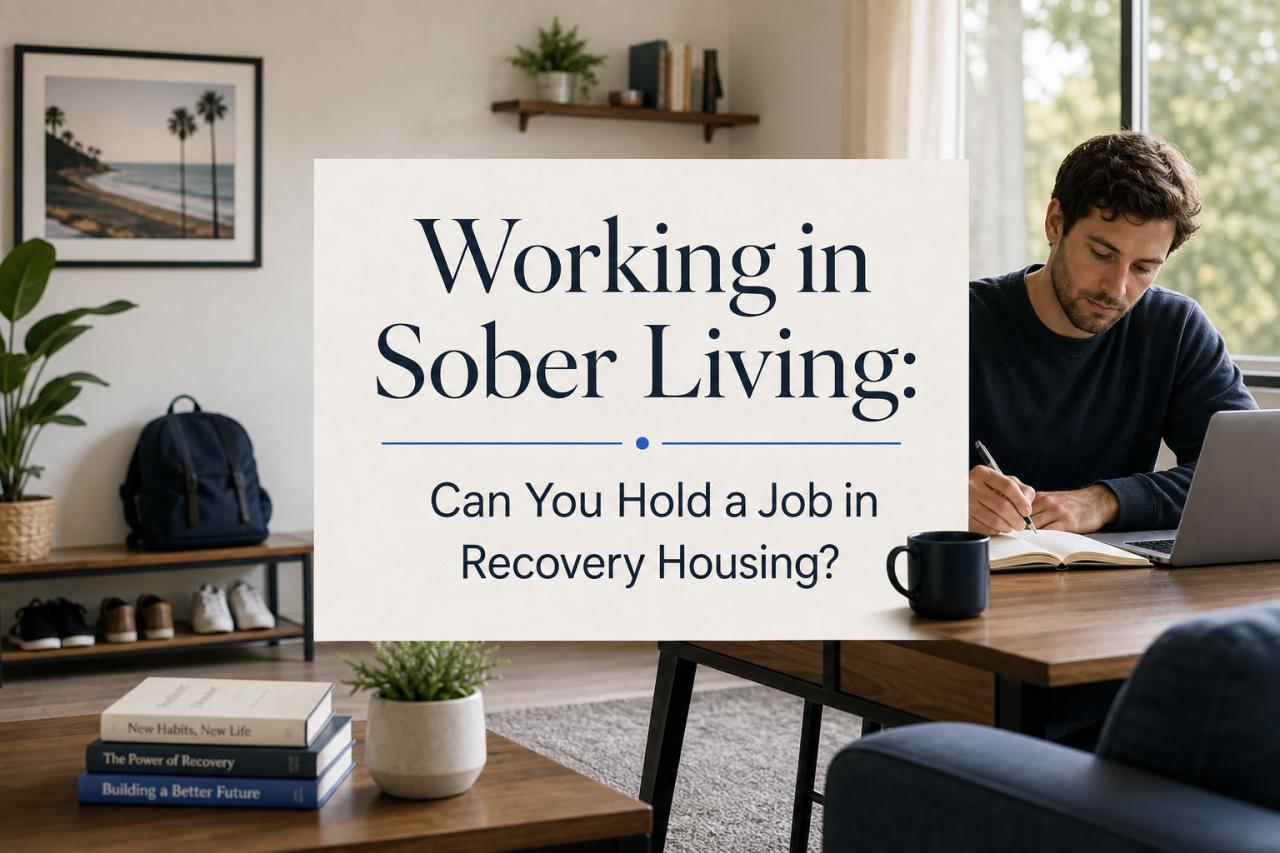
Most recovery residences expect residents to work, attend school, or volunteer, and CA Sober Living's Orange County houses are built around that expectation.
CA Sober Living offers client-centered services. Reach out for a confidential consultation and see exactly how we'd apply these strategies to your facility.